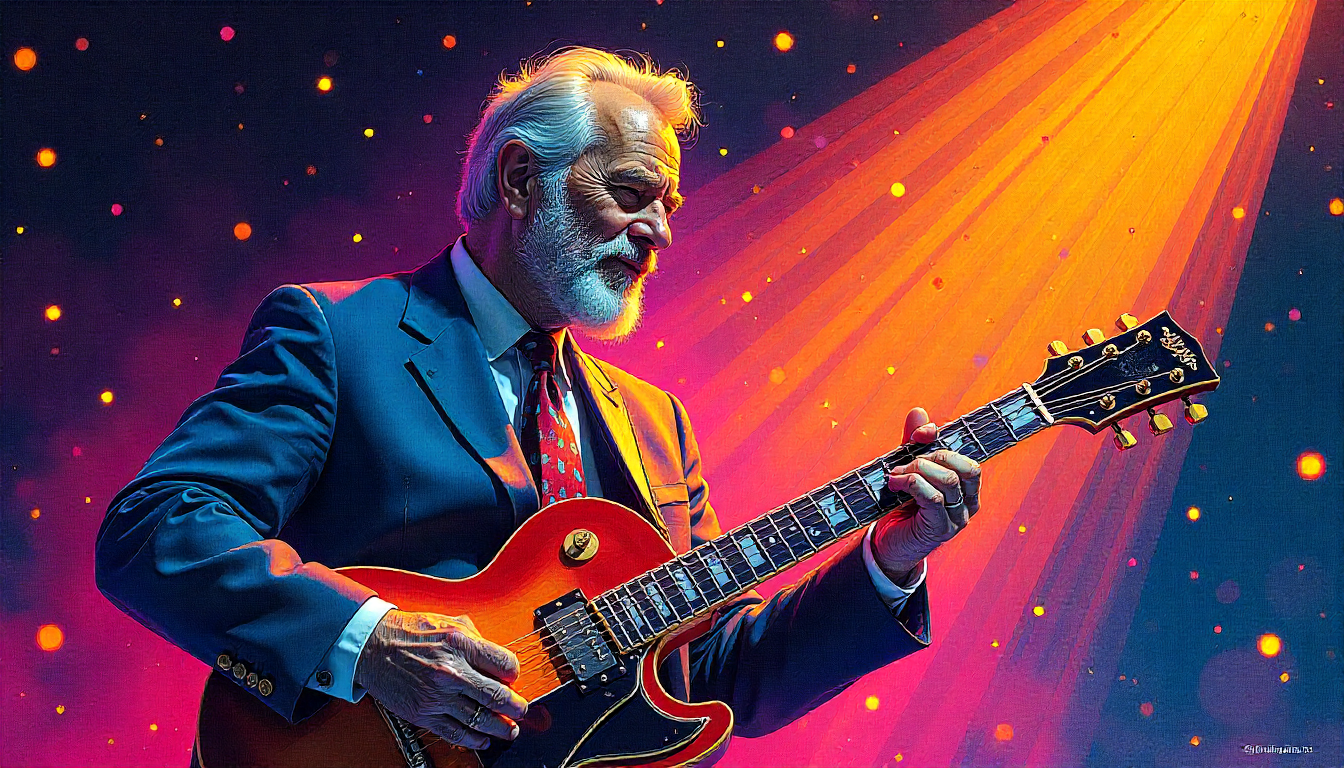
Respect, Patience, and the Faith of Musicians
Phillips treated every visitor with the same courtesy. Joe Hill Louis—dapper, polite, and a one‑man band—was recorded even when his work seemed like a novelty. Phillips remembered Joe as “a treasure,” worth recording because of the human truth in his sound, not because of immediate commercial value.
Veterans such as Jack Kelly and Charlie Burse and young players like Phineas Newborn Jr. drifted through the studio to get used to the room, the microphone, and to Phillips himself. Whether someone walked in with a full band or a battered four‑string guitar, Phillips listened first. He refused to prioritize polish over feeling: if a man arrived with four strings, Phillips would not buy a new one for him—what mattered was what that man had to say.
There was no charge, no contract, and no pressure. Phillips’s method was simple: provide the space, listen, and encourage. Artists had to choose to trust him, and that trust—slowly won—was the essential currency of Sun Studio’s early years.
From Rocket 88 to Sun Records
Though the early months were slow, crucial recordings followed. The famous 1951 session often credited as an early rock record—"Rocket 88"—helped demonstrate how electric amplification, driving rhythm, and a raw energy could cohere into something new. By 1952 Phillips founded Sun Records, which allowed him to release and promote recordings on his own terms. Artists who passed through his doors—B.B. King, Howlin’ Wolf, Ike Turner, and eventually Elvis Presley—brought a mixture of blues, gospel, and country influences that, in Phillips’s hands, produced a fresh hybrid sound.
Phillips’s engineering choices—capturing live takes, letting room acoustics speak, and prioritizing feel—created a sonic fingerprint. The Sun sound was not a polished studio gloss; it was the room itself, the performer’s breath, the imperfection of a string, and the urgency of the moment.
Jelly Roll Morton: The Proclaimer
Decades before Phillips, Jelly Roll Morton was proclaiming his place in musical history. Decked in a cowboy hat and red bandanna, Morton declared himself “the originator of jazz” and then sat down and proved it. Morton’s swagger was an assertion of creative authorship in a world that too often denied it. His bold self‑promotion—equal parts performance art and sincere claim—was grounded in virtuosity and originality.
Morton’s famous line—often paraphrased as “Let your inner self break through”—is the philosophical mirror of Phillips’s practice. Where Morton insisted on his own authorship, Phillips constructed a place where others could discover theirs.
Sidney Bechet, Duke Ellington, and the Sound from the Inside
Sidney Bechet’s soprano saxophone left a lasting impression on Duke Ellington. Ellington described Bechet’s sound as “all wood…all soul, all from the inside,” a music that seemed to "call somebody." That sense of calling—the idea that a solo can summon a listener beyond technical mastery—was the exact quality Phillips chased with his microphone. Bechet’s music was not about virtuoso ornamentation alone; it carried a voice. Phillips wanted that same voice in Memphis blues and in the ragged rockabilly of teenagers who had rarely been given a microphone.
Two Models of Musical Liberation
Although Morton and Phillips operated in different eras and musical idioms, they shared a core conviction: music is the expression of the inner self. Morton’s path was self‑assertive—he claimed a legacy. Phillips’s path was catalytic—he enabled others. One man shouted, “I am the sound.” The other quietly arranged a space so others could say the same.
Both approaches dismantled hierarchies: Morton pushed Black musical innovation into the public sphere; Phillips blurred racial and genre lines by welcoming gospel, blues, country, and R&B into the same studio. Both believed that the truest music is personal music, and that authenticity is more vital than polish.
Why the Model Still Matters
In an era of highly produced pop and algorithmic playlists, Phillips’s model remains instructive. Contemporary independent studios and DIY artists echo his practices: low barriers to recording, emphasis on live takes, an ethic of artistic trust, and the belief that sonic truth can emerge from imperfection. Modern equivalents may have different tools—digital audio workstations, social platforms, viral marketing—but the underlying values align: listen first, preserve the moment, and amplify authentic voices.
When modern indie studios offer walk‑in hours, sliding‑scale rates, or community outreach programs, they are not merely serving a market—they are sustaining a cultural practice Phillips helped institutionalize: music as a means of voice and liberation.