By @Good2GoRocknRoll — the amplifier behind the music, exploring rock’s legacy one riff at a time.
The Unsung Backbone: The Role of Bass in Rock Music
Why bassists are often overlooked and undervalued — and twenty underrated players who shaped the sound of rock.
•
Expanded essay with citations
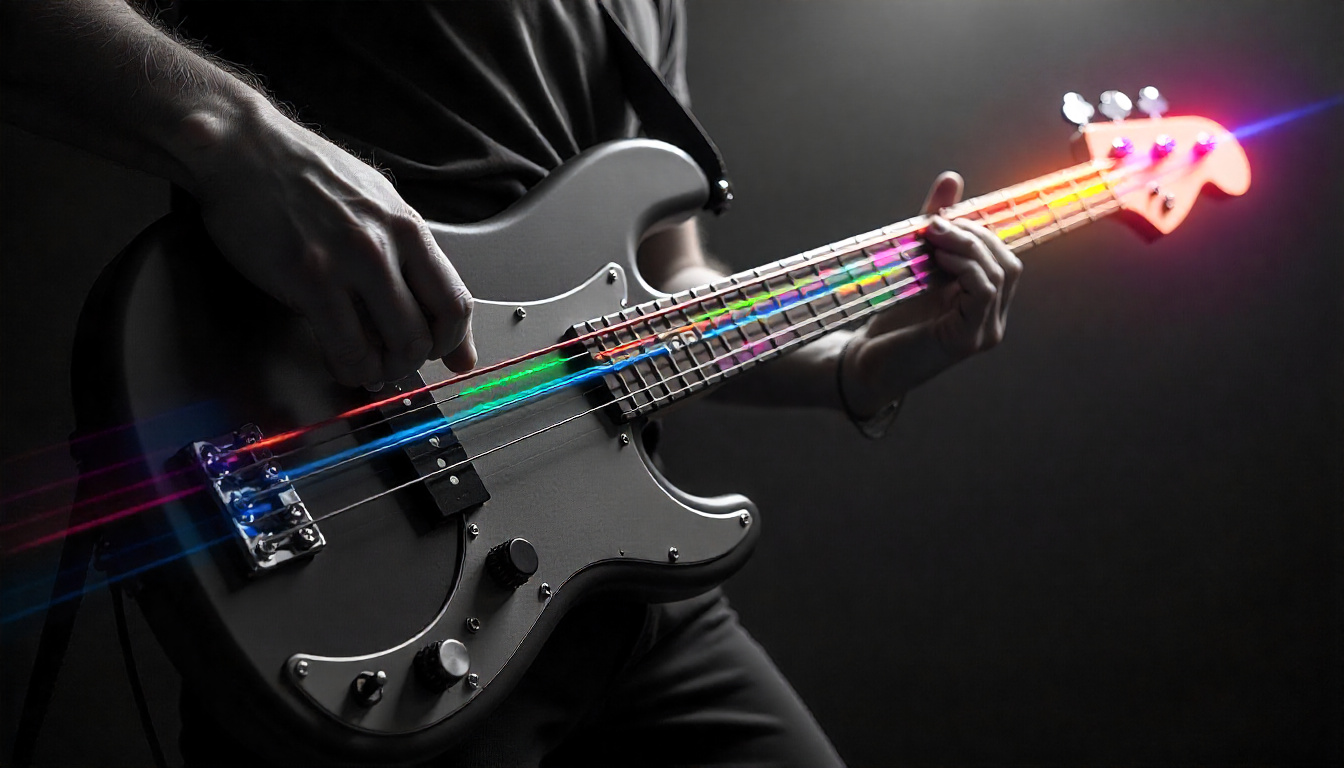
The image of rock is built around solos, spotlights, and swagger. Yet the music’s physical force — the part you feel in your chest at a live show — usually comes from an instrument that rarely asks for attention: the bass. It’s the frequency that glues drums to chords, the element that turns riffs into grooves, and the unsung source of emotional ballast in countless songs.
The Pulse That Moves the Body
Bass works in a frequency range our bodies perceive as much as our ears. Live, it moves air and resonates with the listener’s chest. When the low end is right, a song becomes tangible; when it’s missing, the music can feel thin and unanchored. The bass gives rock its physical presence and its ability to provoke motor responses — nodding, stomping, dancing — that are the essence of the live rock experience.
“Bass is what makes your chest feel the song, not just hear it.” — Rick Rubin. (see Works Cited)
Bridging the Divide: Rhythm Meets Melody
The bassist exists in two musical worlds at once. They lock in with the drummer’s kick and snare while simultaneously supporting (or conversing with) the harmonic textures of guitars and vocals. That dual function makes the bass a unique compositional tool: it can be rhythmic and melodic, anchoring and leading, spare and expressive.
John Entwistle of The Who used bass like a lead voice, weaving countermelodies that cut through the mix. Cliff Williams of AC/DC used economy and steadiness to provide an iron foundation for mammoth anthems. Both approaches are masterful in different ways — one expands the bass’s role, the other proves how indispensable subtlety can be.
🖤 Turn your favorite album cover or concert photo into stunning wall art.
There are cultural and practical reasons. Visually, the frontman and lead guitarist satisfy the audience’s desire for spectacle; bassists are often less animated and occupy the lower frequencies that are felt more than seen. In production and radio mixes, low frequencies are sometimes attenuated to avoid overloading small speakers, giving the impression the bass is less important than it is.
Criticism and popular narratives typically favor melody and lyrics. That bias pushes rhythm and harmonic support — where bass lives — out of the spotlight. Yet, when you strip away everything but the low end on a mix, you’ll often find the entire groove and emotional center still intact.
The Emotional Resonance of the Low End
Bass colors mood. A minor walking pattern can introduce melancholy; a syncopated figure can create unease. In some songs the bass is the emotional narrator: Paul McCartney’s melodic bass on “Something” reads like an intimate second vocal; Peter Hook’s high, ringing basslines became the melancholic voice of Joy Division and early New Order.
20 Underrated Rock Bassists Who Shaped the Sound
The following players deserve more attention, both for their technical craft and for the emotional architecture they contributed to iconic songs and albums.
John Deacon (Queen) — Architect of pop-funk grooves such as “Another One Bites the Dust” and a quietly brilliant contributor to Queen’s melodic foundation. [Far Out Magazine]
Carlos Dengler (Interpol) — Angular, melodic bass lines that anchored the post-punk revival’s dark atmosphere. [Far Out Magazine]
Ben Shepherd (Soundgarden) — Deep, heavy bass that gave grunge a sludgy, soulful weight. [Society of Rock]
Bruce Foxton (The Jam) — Punchy, melodic lines that often functioned like a second guitar. [Far Out Magazine]
Kim Deal (Pixies) — Minimalist and effective; her lines were essential to the quiet-loud dynamics of alt-rock. [American Songwriter]
Mark Sandman (Morphine) — Invented a “low rock” sound with a two-string approach that produced enormous sonic personality. [American Songwriter]
Bob Daisley (Ozzy Osbourne / Rainbow) — Sophisticated phrasing that anchored early solo-era metal. [American Songwriter]
Paolo Gregoletto (Trivium) — Technical precision combined with melodic sense in modern metal. [Ultimate Guitar]
Michael Anthony (Van Halen) — Timing, tone, and harmony vocals that gave the band its signature polish. [Ultimate Guitar]
Cliff Williams (AC/DC) — Economy and reliability; the steady pulse behind stadium anthems. [Carthurneal]
Ian Hill (Judas Priest) — The steady underpinning for twin-guitar metal assaults. [Carthurneal]
Simon Gallup (The Cure) — Driving melodic lines that became the band’s emotional engine. [Carthurneal]
Leon Wilkeson (Lynyrd Skynyrd) — Grounded Southern rock with fluid, dependable low-end. [Carthurneal]
Tal Wilkenfeld — A modern virtuoso, improvisational interplay (notable with Jeff Beck) and a commanding presence on the instrument.
Bill Church (Montrose) — Early hard-rock tone-setter whose grooves powered Sammy Hagar’s first band.
Paul Harwood (The Verve) — Melodic bass patterns that shaped Britpop textures and atmospherics.
Ryan Martinie (Mudvayne) — Percussive, complex playing that pushed metal bass technique forward.
Gerald Johnson (Steve Miller Band) — Smooth, driving foundation behind radio-friendly classic-rock hits.
Tom Evans (Badfinger) — Songwriter and melodic bassist who helped define power-pop bass technique.
John Persh (The Outlaws) — Brought jam energy and Southern nuance into disciplined song forms.
Toward a Reappraisal
Listeners and historians are slowly re-balancing the narrative. Isolated-track releases, multitrack remasters, documentaries, and an active online community of musicians have made bass craft more visible and studied. When the layer of ephemeral spectacle fades, the low end remains — and with it, the evidence of how much the bassist matters.
Conclusion: The Heart Beneath the Noise
Spotlights will always favor the flashy, but the power of rock is often in its quietest machinery. Bassists do not always court applause; they deliver it by creating the conditions in which songs can breathe and move people. To listen deeply to rock is to listen for the foundation — the pulse beneath the noise — and to give the bassist their due.