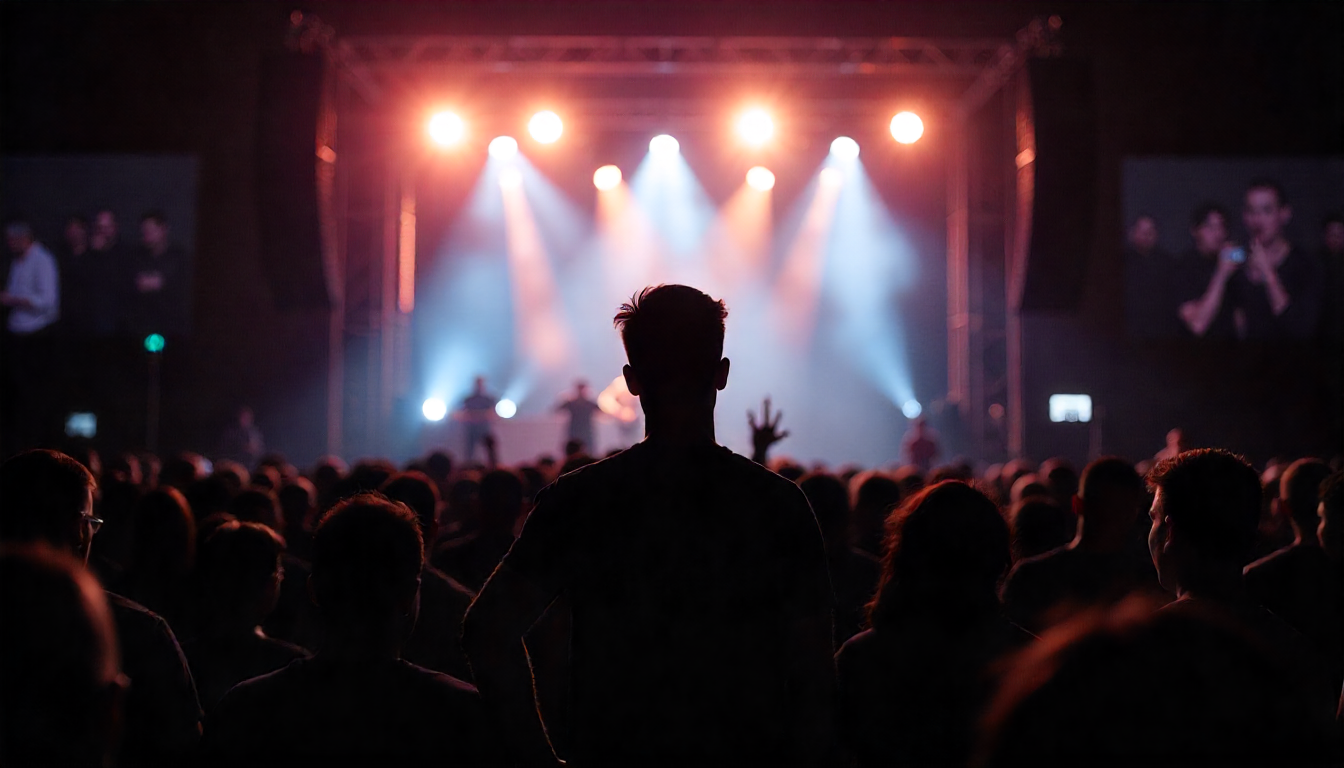
There’s an undeniable difference between hearing a band on a record and experiencing them live. While recordings capture the notes, rhythms, and vocals, concerts offer something recordings can never fully replicate: presence. Being physically in the same space as the musicians, feeling the vibrations, and sharing the moment with hundreds or thousands of others transforms the music into a multi-sensory experience that engages more than just the ears. In a sense, live music is a holistic event: it involves the body, mind, and community in ways recordings cannot.
At a live show, sound is experienced in a visceral, almost bodily way. Low-frequency bass reverberates through the floor and can be felt in the chest, drum hits create pulses that travel through your limbs, and the sheer volume of amplified instruments can overwhelm the auditory system in a thrilling, almost tangible way. Even subtle acoustic phenomena—like the way sound waves bounce off walls or the ceiling of a venue—shape the perception of music in real-time. Scholars have observed that “the bodily experience of sound in live performance is a central factor in the intensity and enjoyment of the event” (Auslander, 1999).
Live music offers a profound emotional and social experience. Concerts are communal events, where the reactions of other audience members amplify personal excitement. Being surrounded by hundreds or thousands of people all responding to the same rhythms and melodies creates a shared emotional field that is impossible to reproduce alone with headphones. “The live rock concert is as much about participation and social interaction as it is about the music itself” (Frith, 1996).

🖤 Turn your favorite album cover or concert photo into stunning wall art.

🖤 Make your rehearsal space or home studio sound (and look) like the real deal.

🖤 Get high-quality, legal images and vectors for album covers or posters.

🖤 Turn your band into a business. Manage gigs, invoices, and bookings without the stress.
Live music is inherently unpredictable, and that unpredictability is part of its appeal. Musicians may improvise, extend solos, or respond spontaneously to the audience, creating fleeting moments that exist only in that particular performance. These unscripted moments imbue live music with authenticity, a human quality often polished away in recordings. Imperfections—slightly off-tempo notes, raw vocal edges, or accidental instrumental flourishes—can make the experience feel more real and immediate.
Research in neuroscience and psychology helps explain why live music feels more powerful. Listening to music in person activates multiple brain regions simultaneously, including areas responsible for emotion, reward, motor coordination, and memory (Blood & Zatorre, 2001). The combination of auditory input, physical vibration, visual stimulation, and social interaction triggers the release of neurochemicals such as dopamine and oxytocin, which produce pleasure, emotional bonding, and even euphoria (Salimpoor et al., 2011). The brain perceives music as a full-bodied, multi-dimensional experience rather than a simple auditory signal, amplifying enjoyment, emotional intensity, and memory formation.
| Aspect | Live Concert | Recording |
|---|---|---|
| Physical Sensation | Vibrations felt through body; immersive acoustics | Sound limited to speakers/headphones; no physical impact |
| Emotional Energy | Enhanced by crowd energy and performer interaction | Emotions mediated by personal interpretation only |
| Spontaneity | Improvisation, extended solos, real-time reactions | Fixed and polished; no improvisation |
| Social Connection | Shared experience with hundreds/thousands of fans | Isolated listening, minimal social feedback |
| Neurological Engagement | Activates multiple brain regions; dopamine and oxytocin released | Limited multisensory input; reduced neurochemical response |
While recordings allow for repeated listening, study, and appreciation of music, live performances offer a level of immediacy and engagement that cannot be captured in any recording. The combination of physical sensation, emotional energy, social connection, spontaneity, and neurological stimulation makes concerts a richer, more immersive experience. Being physically present transforms music from a sequence of sounds into a holistic event—something that is felt, lived, and remembered. For anyone seeking the full power of music, there is simply no substitute for being there.