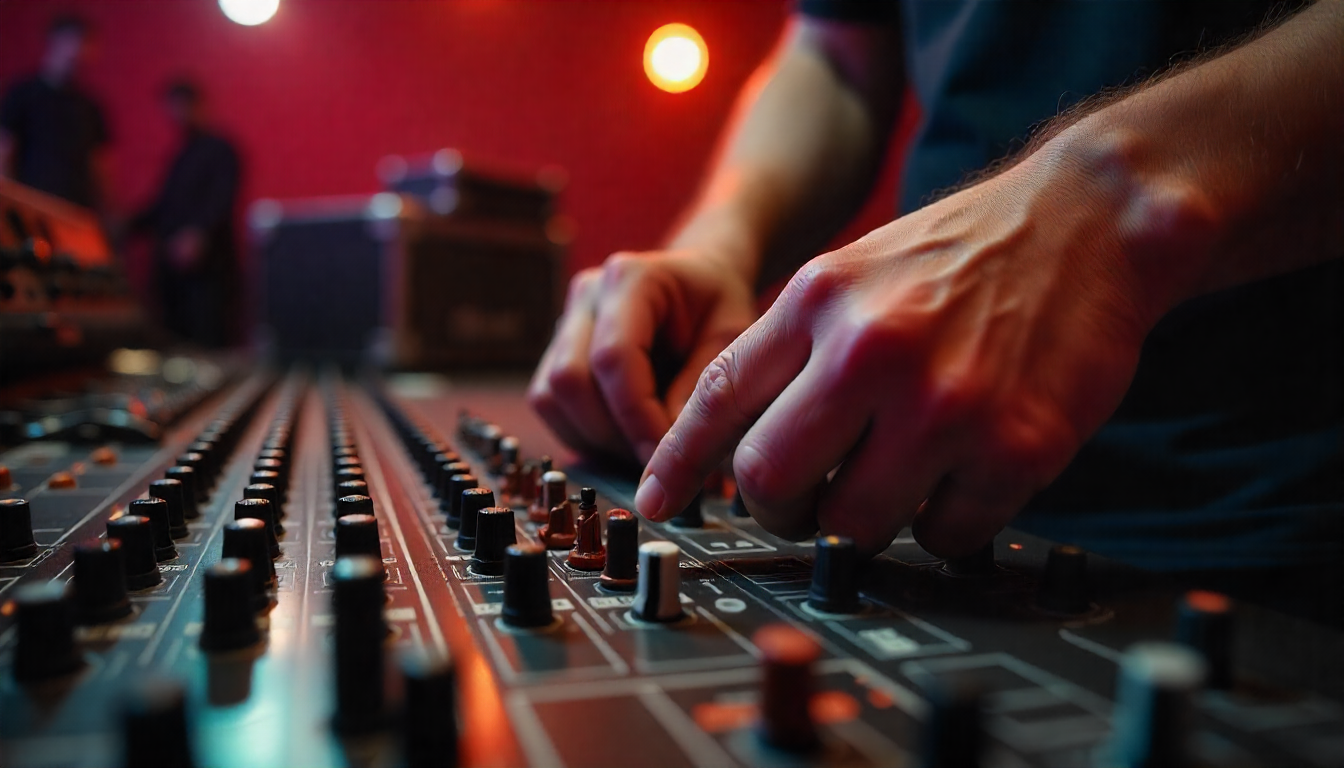
Rock concerts are remembered for riffs, choruses, and iconic performers—yet much of what makes a show memorable happens offstage or out of sight. This article examines three overlooked contributors to rock’s aesthetic: lighting designers who paint music with light, road crews who shaped sound through technical invention, and DIY instrument builders whose handmade tools made records sound distinct. Parenthetical citations are included throughout; full references appear in the Works Cited at the end.
Lighting in rock evolved from practical illumination into an expressive art form that interprets and amplifies music. Designers used color, movement, shadow, and projection to create emotional narratives that paralleled the music’s arc. Psychedelic light shows of the 1960s—like the Joshua Light Show—responded in real time to improvisation, producing a synesthetic experience for audiences (DeRogatis, 2003).
As lighting technology advanced, designers such as Jules Fisher and Marc Brickman adapted theatrical and cinematic techniques for arenas and stadiums, coordinating cues with musical dynamics and using large-scale projection to create immersive narratives (Fisher, 2016; Brickman, 2008). By the 1980s and 1990s, tours such as U2’s Zoo TV integrated light, video, and stagecraft into a cohesive commentary on media and spectacle (Fast, 2005).

🖤 Turn your favorite album cover or concert photo into stunning wall art.
🖤 Make your rehearsal space or home studio sound (and look) like the real deal.

🖤 Get high-quality, legal images and vectors for album covers or posters.

🖤 Turn your band into a business. Manage gigs, invoices, and bookings without the stress.
“Lighting became a dramaturgical partner to the music—guiding attention, shaping emotional crescendos, and creating iconic stage moments.” (Fisher, 2016)
Key techniques: synchronized cueing, color palettes tied to song sections, projection mapping, and use of shadow to sculpt performers within a stage picture (DeRogatis, 2003; Brickman, 2008).
Roadies and techs have traditionally been viewed as the practical workforce of touring—but many were experimental engineers whose fixes and hacks became new musical tools. For instance, Roger Mayer’s Octavia (developed in part to serve Hendrix’s tone) and other custom rigs emerged from collaboration between musicians and engineers who were willing to prototype offstage (Mayer, 1999).
The Grateful Dead’s Wall of Sound exemplifies how a band’s crew and engineers redesigned live sound for clarity and power; the system’s conception and execution required inventive problem-solving from the road crew as much as from studio engineers (Dodd, 2015). Anecdotal histories also attribute early distortion sounds to unexpected failures—damaged speakers, overdriven tubes, and hastily rewired preamps preserved because they sounded musically interesting (Hunter, 2007).
Practical impacts: on-the-fly repairs and improvisations shaped pedal designs, speaker setups, and live mixing approaches that informed later commercial products and standard touring practice (Mayer, 1999; Dodd, 2015).
DIY instruments carry forward a tradition from rural blues to modern garage rock: using limited resources to access unique timbres. Cigar-box guitars, washboards, and any number of repurposed objects appear in recordings not as novelty but as sources of tone and authenticity (Wald, 2004).
Examples: Brian May’s Red Special—a guitar he and his father built from a mantelpiece—became a cornerstone of Queen’s studio sound, demonstrating that carefully executed DIY luthiery can rival commercial instruments (May, 2017). Artists such as Jack White and Seasick Steve intentionally used homemade or modified instruments to preserve a gritty, immediate character on recordings (White, 2010; BBC, 2009).
Creative outcomes: handmade instruments often introduced unpredictable harmonic content, sympathetic buzzing, or altered sustain—qualities producers and artists harnessed for texture and identity (Reynolds, 2005).
Understanding rock’s history means looking beyond frontmen and hit singles to the backstage inventors, designers, and makers who shaped performances and recordings. Lighting designers translate sonic emotion into visual form; roadies forge practical innovations that become sonic signatures; DIY builders expand the palette of what an "instrument" can be. Their combined influence helped create rock’s trademark combination of spectacle and grit.
Acknowledging these contributors broadens our appreciation of rock as a collaborative, technical, and aesthetic practice—one where creativity often lives in the margins.
Explore further:
Image Credit: Freepik.com